
Introduction
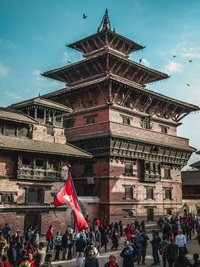
Culture in Nepal is a common topic of interest for many people. Nepal is a beautiful country located between India and China, known for its rich cultural heritage, stunning mountains, hills, rivers, and natural beauty. Culture in Nepal is deeply influenced by its multi-ethnic, multi-lingual, and multi-religious society. People from different communities live together in harmony, respecting each other’s traditions, religions, and cultural practices. This unity in diversity makes Nepal’s culture unique and globally respected.

Culture in Nepal is one of the richest and most diverse cultural heritages in the world. Nepal is a beautiful country located between India and China, known for its stunning landscapes, including green hills, majestic mountains, the Himalayas, rivers, and waterfalls. This natural beauty makes Nepal even more attractive and unique.
The culture in Nepal is deeply influenced by its multi-ethnic, multi-lingual, and multi-religious society. People from different communities live together in harmony, respecting each other’s religions, traditions, and cultural practices. This unity in diversity is a key feature of culture in Nepal.
Festivals play an important role in Nepalese culture. Major festivals such as Dashain, Tihar, Maghe Sankranti, and Teej are celebrated with great joy and enthusiasm. These festivals reflect the strong cultural values and traditions of Nepali people.
Traditional clothing is also an important part of culture in Nepal. Women commonly wear Sari and Gunyo Cholo, while men often wear Daura Suruwal as traditional dress. Similarly, the staple food of Nepalese people is Dal Bhat, along with vegetables, pickles, and various local dishes unique to different communities.
Nepal is also rich in linguistic diversity, with people speaking different languages based on their ethnicity and region. This diversity makes the culture in Nepal even more vibrant and meaningful, promoting mutual respect, harmony, and national unity.
Although Nepal is a small country, it has a rich culture and a big heart. The people here are extremely helpful, and helping one another is one of the main characteristics of Nepali people. Its rivers, waterfalls, mountains, and natural beauty make the country attractive to visitors. Every year, thousands of foreign tourists come to Nepal and often praise it as a peaceful and beautiful place.
Festivals in Nepal
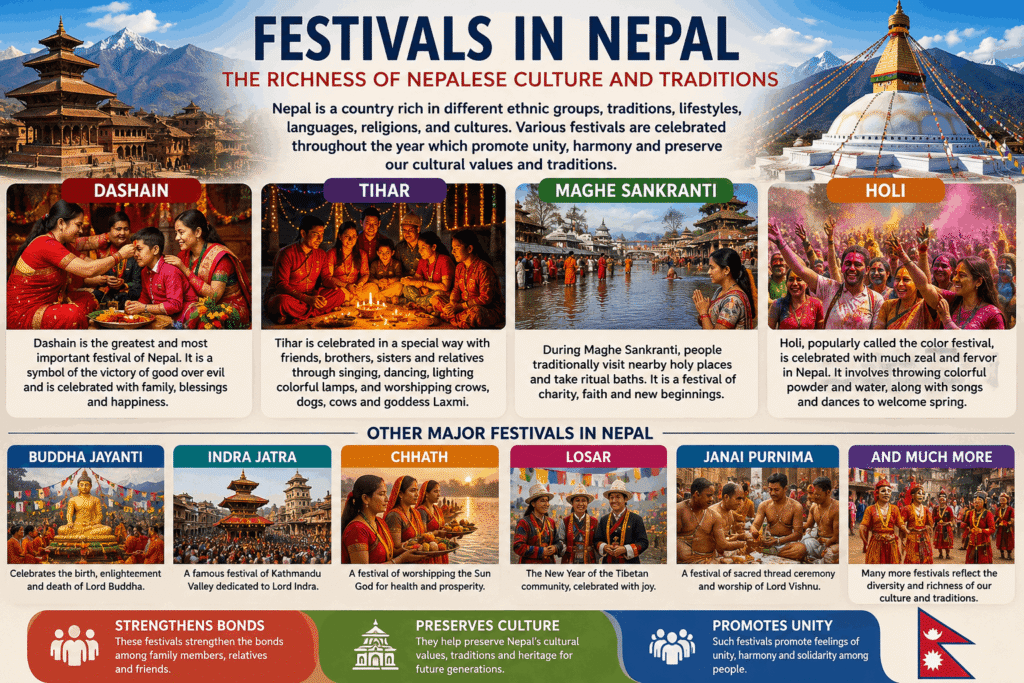
Nepal is a country rich in different ethnic groups, traditions, lifestyles, languages, religions, and cultures. Therefore, various festivals are celebrated throughout the year across the country. Dashain is the greatest and most important festival of Nepal. Tihar is celebrated in a special way with friends, brothers, sisters and relatives through singing, dancing, lighting colorful lamps, and worshipping crows, dogs, cows and goddess Laxmi.
During Maghe Sankranti, People traditionally visit nearby holy places and take ritual baths. These festivals strengthen the bonds among family members, relatives, and friends and help preserve Nepal’s cultural values and traditions. Holi, popularly called the color festival, is celebrated with much zeal and fervor in Nepal. This festival involves throwing colorful powder and water at each other along with songs and dances to welcome spring. Holi brings harmony and happiness among people.
observes festivals such as Buddha Jayanti, Indra Jatra, Chhath, Losar, Janai Purnima and much more. Such festivals indicate the richness of the Nepalese culture and traditions. They contribute to the preservations of the traditional culture and promote feelings of unity and solidarity among people.
Traditional Dress in Nepal
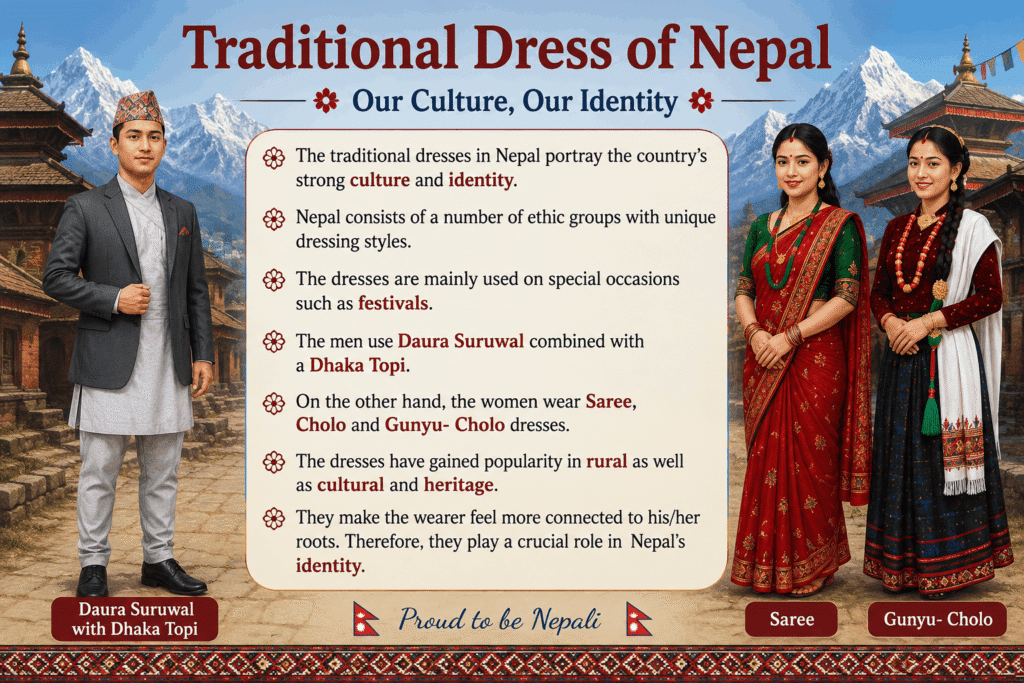
The traditional dresses in Nepal portray the country’s strong culture and identity. Nepal consists of a number of ethnic groups with unique dressing styles. The dresses are mainly used on special occasions such as festivals. The men use Daura Suruwal combined with a Dhaka Topi. On the other hand, the women wear Saree, Cholo and Gunyu- Cholo dresses. The dresses have gained popularity in rural as well as cultural and heritage. They make the wearer feel more connected to his/her roots. Therefore, they play a crucial role in Nepal’s identity.
Food Culture in Nepal
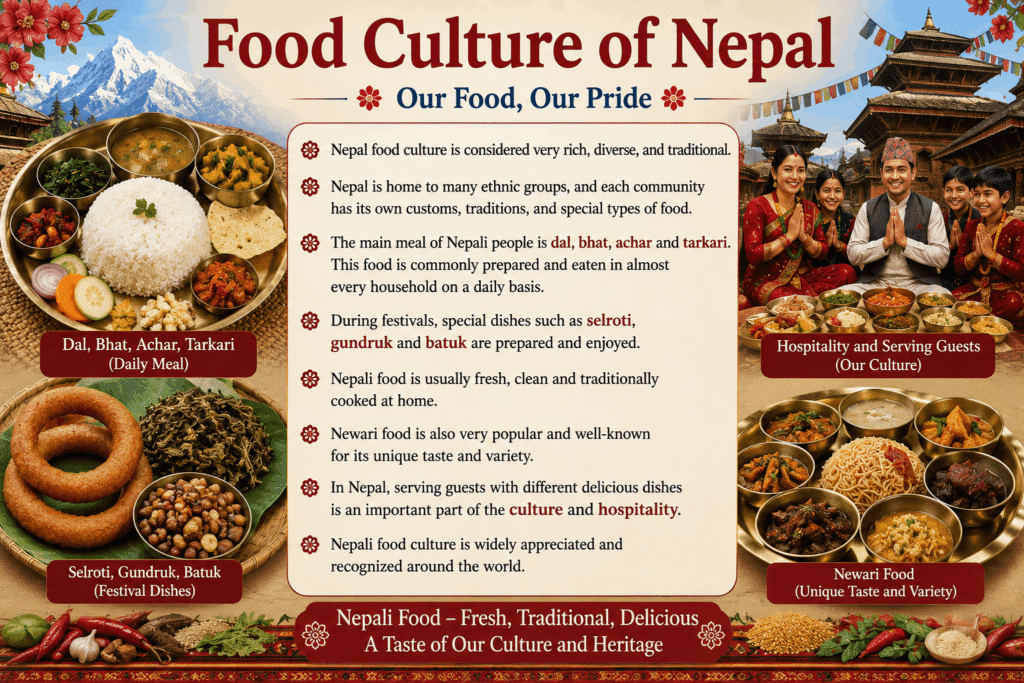
Nepal food culture is considered very rich, diverse, and traditional. Nepal is home to many ethnic groups, and each community has its own customs, traditions, and special types of food. The main meal of Nepali people is dal, bhat, achar and tarkari. This food is commonly prepared and eaten in almost every household on a daily basis.
During festivals, special dishes such as selroti, gundruk and batuk are prepared and enjoyed. Nepali food is usually fresh, clean and traditionally cooked at home. Newari food is also very popular and well-known for its unique taste and variety. In Nepal, serving guests with different delicious dishes is an important part of the culture and hospitality. Nepali food culture is widely appreciated and recognized around the world.
Conclusion
Nepal is a very beautiful country filled with natural beauty, cultural diversity, religion, traditions and a spirit of mutual cooperation. Its clean environment, rivers, greenery, birds , Himalayan mountains and hills further enhance its beauty. It is the shared responsibility of all Nepali people to preserve this beauty so that our identity continues to be known throughout the world as the” Land of Mount Everest” and the “Land of Peace.”