

Introduction
Eco Tourism in Nepal is gaining popularity among travelers who want to experience nature responsibly while contributing to environmental conservation and local community development. Nepal is a country blessed with extraordinary natural beauty, ranging from the snow-capped Himalayas and green hills to dense forests, sparkling rivers, and diverse wildlife habitats. These natural treasures, combined with the country’s rich cultural heritage, make Nepal one of the most attractive destinations for eco tourism.

In recent years, many travelers have become more conscious of the impact their journeys have on the environment. Instead of simply visiting popular tourist attractions, they are looking for meaningful experiences that allow them to connect with nature, learn about local cultures, and support sustainable practices. This growing trend has increased interest in Eco Tourism in Nepal, where visitors can enjoy breathtaking landscapes while helping preserve them for future generations.
Unlike mass tourism, which can sometimes put pressure on natural resources, eco tourism promotes responsible travel. It encourages visitors to respect the environment, minimize waste, conserve resources, and support local communities. Whether it is trekking through the Himalaya’s staying in a village homestay, observing wildlife in a national park, or exploring remote mountain regions, eco tourism offers a rewarding and sustainable way to discover Nepal.
What is Eco Tourism?
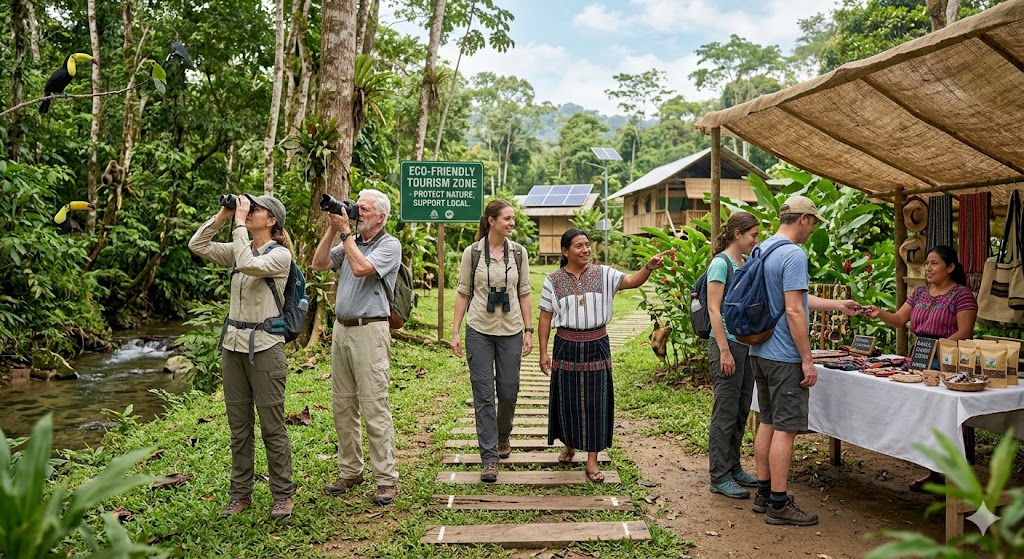
co tourism is a form of responsible travel that focuses on protecting the environment while benefiting local communities. The main purpose of eco tourism is to create positive experiences for both visitors and host communities without damaging natural ecosystems.
Eco tourists seek opportunities to explore nature while learning about conservation efforts and local cultures. They often choose activities such as trekking, bird watching, wildlife observation, nature photography, and community-based tourism. By supporting environmentally friendly tourism practices, travelers help preserve natural habitats and create economic opportunities for local residents.
Eco tourism is not just about visiting natural places. It is about traveling responsibly, respecting local traditions, and ensuring that tourism contributes to environmental sustainability rather than environmental degradation.
Why Eco Tourism in Nepal is Important
Nepal is one of the most environmentally diverse countries in the world. Within a relatively small area, travelers can experience tropical forests, fertile plains, rolling hills, alpine meadows, and some of the highest mountains on Earth. This remarkable diversity makes Nepal an ideal destination for eco tourism.
Eco Tourism in Nepal plays a significant role in protecting the country’s natural and cultural heritage. Tourism revenue helps fund conservation programs, maintain protected areas, and support wildlife protection efforts. Many local communities also benefit directly from tourism-related income, creating incentives to preserve their natural surroundings.
The importance of eco tourism extends beyond environmental conservation. It also promotes sustainable economic development by creating jobs in rural areas where employment opportunities may be limited. Local people can earn income through guiding services, homestays, transportation, handicrafts, and other tourism-related activities.
Furthermore, eco tourism encourages cultural preservation. Visitors often seek authentic experiences, motivating communities to maintain their traditional customs, festivals, architecture, and ways of life.
Beautiful natural landscape ad trekking trail for eco tourism in Nepal adventures
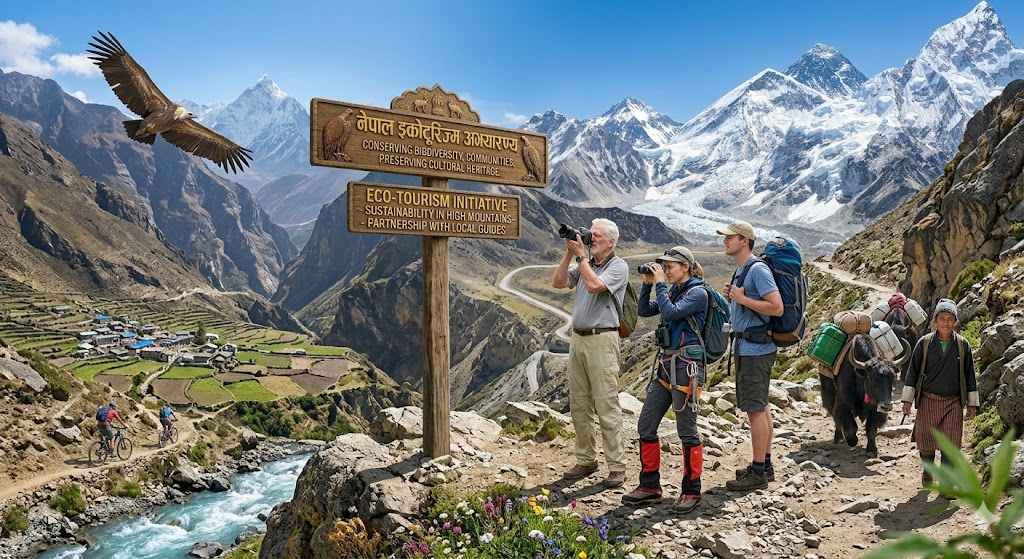
Natural Beauty That Supports Eco Tourism in Nepal
One of the biggest reasons travelers choose Nepal for eco tourism is its incredible natural beauty. Few countries offer such a wide variety of landscapes and ecosystems within a single destination.
The Himalayas are undoubtedly Nepal’s most famous natural attraction. The sight of towering snow-covered peaks, including Mount Everest, attracts adventurers and nature lovers from around the world. Trekking through these mountain regions allows visitors to experience breathtaking scenery while supporting local communities.
Beyond the mountains, Nepal is home to extensive forests, rivers, waterfalls, wetlands, and lakes. These natural environments provide habitats for thousands of plant and animal species. Many travelers are surprised to discover that Nepal’s ecological diversity is just as impressive as its mountains.
The country’s protected areas, national parks, and conservation regions play a vital role in preserving biodiversity while offering opportunities for sustainable tourism.
Top Eco Tourism Destinations in Nepal
Chitwan National Park
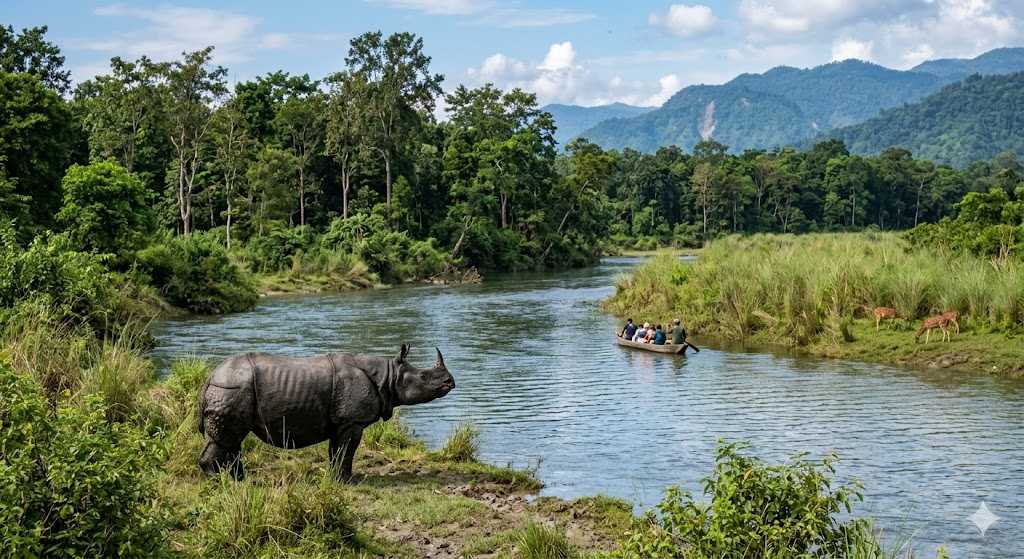
Chitwan National Park is one of the most successful examples of Eco Tourism in Nepal. Located in the Terai region, the park is famous for its rich biodiversity and conservation achievements.
Visitors can enjoy jungle safaris, canoe rides, bird watching, and guided nature walks. Chitwan is home to the endangered one-horned rhinoceros, Bengal tiger, wild elephants, crocodiles, and hundreds of bird species.
Tourism activities in the park help generate funds for conservation while creating employment opportunities for local communities. As a result, both wildlife and local residents benefit from eco tourism initiatives.
Annapurna Conservation Area
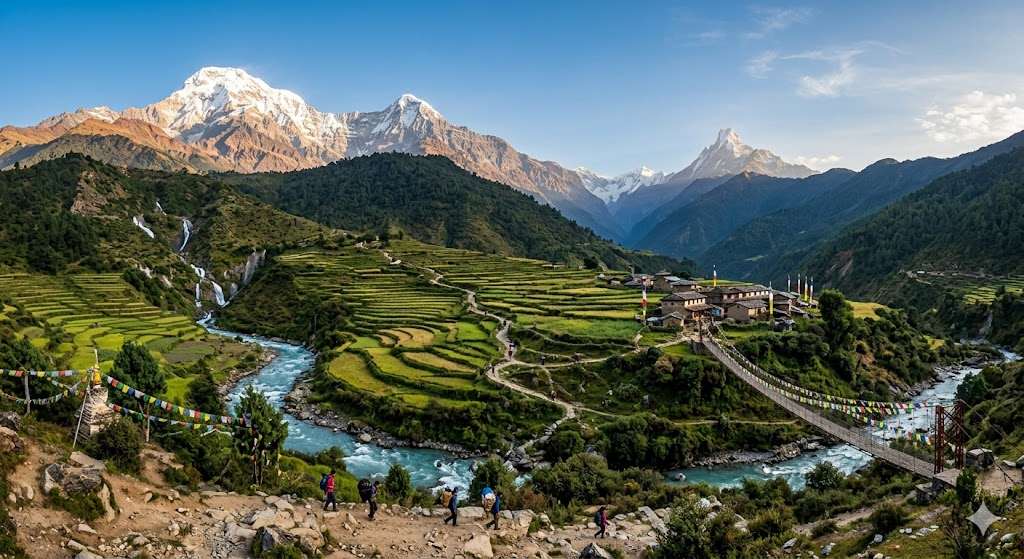
The Annapurna Conservation Area is Nepal’s largest protected area and one of the country’s most popular trekking destinations.
What makes this region unique is its successful community-based conservation model. Local people actively participate in tourism management and environmental protection. Visitors not only enjoy stunning mountain views but also experience the culture and hospitality of local communities.
The Annapurna region demonstrates how tourism can support conservation while improving the livelihoods of local residents.
Sagarmatha National Park
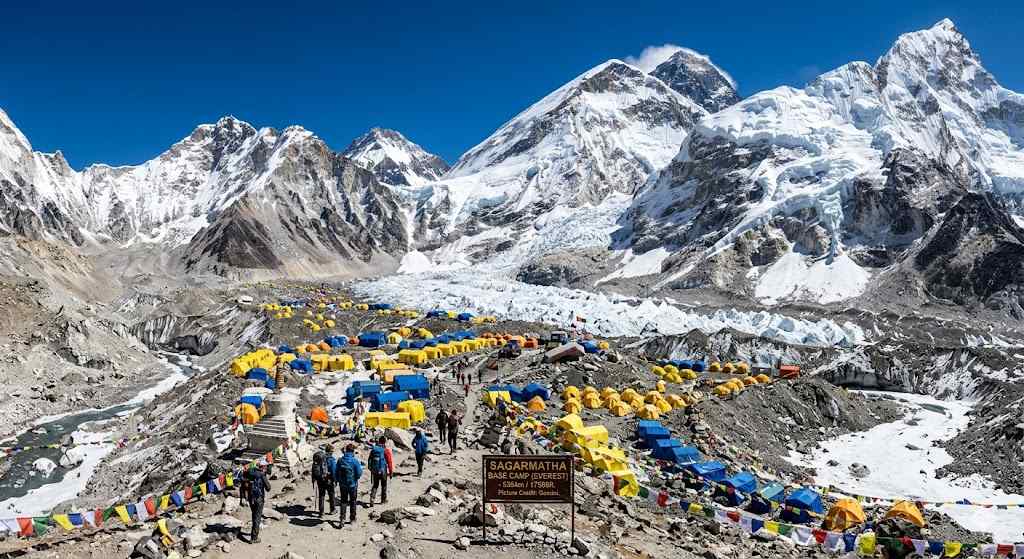
Home to Mount Everest, Sagarmatha National Park is one of Nepal’s most iconic eco tourism destinations.
The park features spectacular mountain landscapes, glaciers, forests, and unique wildlife. Visitors who trek through the Everest region have the opportunity to learn about Sherpa culture while contributing to the local economy.
Eco tourism initiatives in the region encourage responsible trekking practices and environmental conservation.
Rara Lake
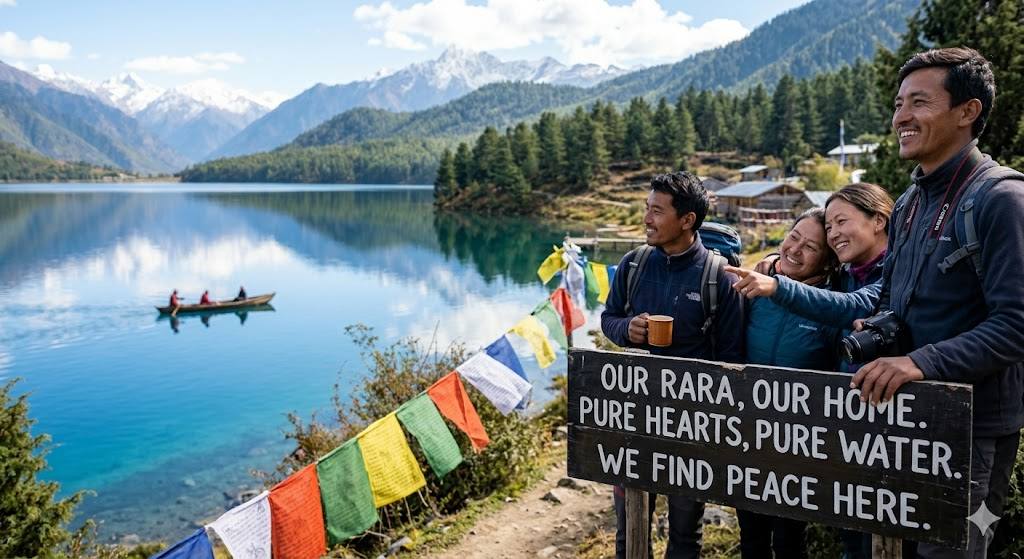
Often described as one of Nepal’s hidden treasures, Rara Lake offers visitors a peaceful and unforgettable experience.
Surrounded by forests and mountains, the lake’s crystal-clear water reflects the beauty of the surrounding landscape. The remote location helps preserve its natural environment, making it an excellent destination for eco-conscious travelers seeking tranquility and natural beauty.
Bardia National Park

Bardia National Park is another outstanding destination for eco tourism. Compared to some of Nepal’s more popular tourist destinations, Bardia offers a quieter and more authentic wilderness experience.
The park is home to tigers, rhinoceroses, elephants, deer, and numerous bird species. Visitors can explore the park through guided safaris while learning about wildlife conservation efforts.
Popular Eco Tourism Activities in Nepal
Popular Eco Tourism Activities in Nepal offer visitors a unique opportunity to explore the country’s natural beauty while supporting environmental conservation and local communities. From trekking in the Himalayas and wildlife watching in national parks to bird watching and homestay experiences, these activities allow travelers to enjoy Nepal responsibly. Eco-tourism not only creates memorable experiences but also helps protect nature and promote sustainable tourism practices.
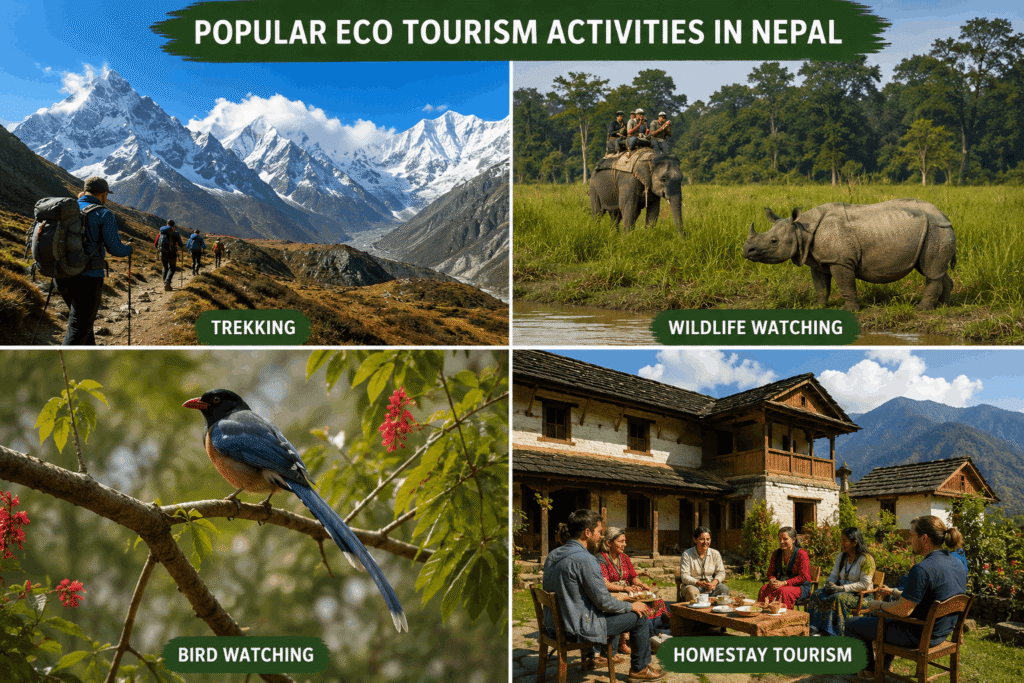
Trekking
Trekking is one of the most popular eco tourism activities in Nepal. Trails such as Everest Base Camp, Annapurna Circuit, and Langtang Valley attract thousands of visitors each year.
Responsible trekking supports local businesses, creates jobs, and promotes conservation awareness. Many trekking routes pass through traditional villages where visitors can experience local culture firsthand.
Wildlife Watching
Nepal offers excellent opportunities for wildlife observation. National parks and conservation areas provide habitats for rare and endangered species.
Responsible wildlife tourism generates revenue that supports conservation programs and encourages communities to protect wildlife rather than exploit it.
Bird Watching
With hundreds of recorded bird species, Nepal is a paradise for bird enthusiasts. Wetlands, forests, and protected areas attract bird watchers from around the world.
Bird watching is considered one of the most environmentally friendly tourism activities because it has minimal impact on natural ecosystems.
Homestay Tourism
Community-based homestays have become increasingly popular in Nepal. Staying with local families allows visitors to experience authentic village life while contributing directly to the local economy.
Guests can enjoy traditional food, participate in cultural activities, and learn about local customs and traditions.
Nature Photography

Nepal’s stunning landscapes, wildlife, and cultural diversity make it a dream destination for photographers. Nature photography encourages visitors to appreciate and document the beauty of the environment without disturbing it.
Benefits of Eco Tourism in Nepal
Eco Tourism in Nepal provides numerous benefits for both people and nature.
From an environmental perspective, eco tourism helps protect forests, wildlife, rivers, and other natural resources. Tourism revenue supports conservation projects and environmental education programs.
Economically, eco tourism creates jobs and generates income for local communities. Many families rely on tourism-related activities as their primary source of livelihood.
Socially, eco tourism promotes cultural exchange and understanding between visitors and local communities. It encourages respect for different cultures while helping preserve traditional lifestyles.
Eco tourism also raises awareness about environmental issues and inspires both travelers and local residents to adopt sustainable practices.
Challenges Facing Eco Tourism in Nepal
Despite its many advantages, eco tourism in Nepal faces several challenges.
Increasing tourist numbers can put pressure on fragile ecosystems if tourism activities are not managed responsibly. Waste management remains a concern in some trekking areas and tourist destinations.
Climate change is another major challenge. Rising temperatures, melting glaciers, and changing weather patterns can affect both natural ecosystems and tourism infrastructure.
Limited transportation and infrastructure in remote regions can also make sustainable tourism development more difficult.
To overcome these challenges, cooperation between government agencies, conservation organizations, tourism operators, and local communities is essential.
The Future of Eco Tourism in Nepal
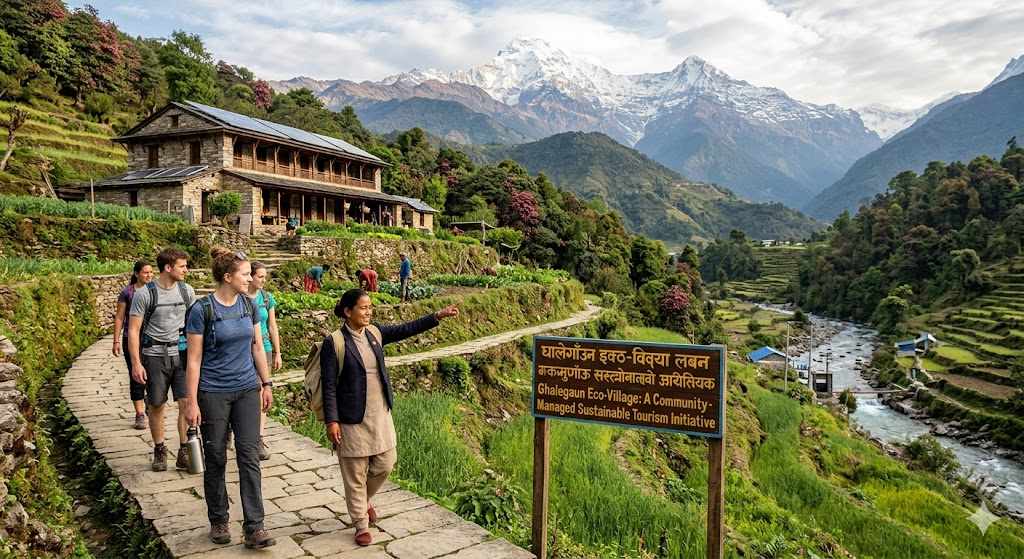
The future of Eco Tourism in Nepal appears promising. As travelers become more environmentally conscious, demand for sustainable tourism experiences continues to grow.
Nepal has an opportunity to position itself as a global leader in eco tourism by promoting responsible travel practices and investing in sustainable tourism infrastructure.
Community participation will remain a key factor in future success. When local people benefit directly from tourism, they are more likely to support conservation efforts and protect natural resources.
With proper planning and sustainable management, eco tourism can continue contributing to environmental protection, economic growth, and cultural preservation for many years to come.
Conclusion
Eco Tourism in Nepal is more than just travel—it is about enjoying nature with responsibility and respect. From Chitwan’s forests to Annapurna trails, Everest region, and Rara Lake, every destination offers a beautiful and meaningful experience.
It connects visitors with local people, supports their income, and helps protect nature for the future. In simple words, Nepal is not just a place to visit—it is a place to experience, protect, and remember.